Physical Address
304 North Cardinal St.
Dorchester Center, MA 02124
Physical Address
304 North Cardinal St.
Dorchester Center, MA 02124

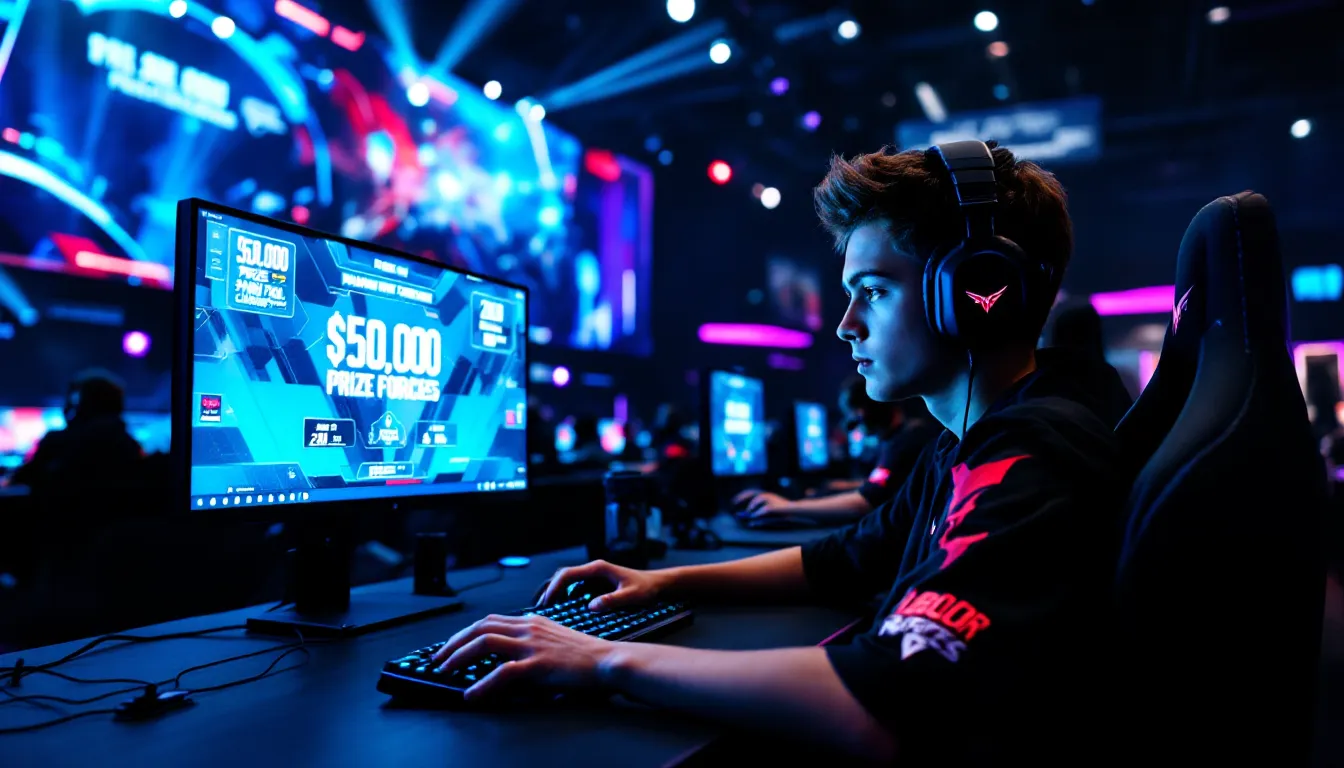
Roblox has quietly become one of the most underestimated platforms in esports. While mainstream attention gravitates toward Valorant, League of Legends, and Counter-Strike 2, millions of players are competing in Roblox esports tournaments, grinding ranked modes, and building careers in one of gaming’s fastest-growing competitive ecosystems. The platform hosts over 200 million monthly active users, and a growing slice of that population is serious about competitive play. Whether you’re curious about how Roblox esports works, looking to break into the scene yourself, or just wondering if this is a legitimate competitive space, this guide covers everything you need to know as of 2026.
Roblox esports refers to competitive gaming within Roblox, a user-generated content platform where players compete in games created by other players. Unlike traditional esports titles owned by major publishers, Roblox esports is decentralized. Professional players compete in games developed by independent creators, ranging from tactical shooters to parkour challenges to custom battle royales.
The key distinction: Roblox doesn’t create most of the competitive titles. Instead, the platform provides the engine and infrastructure, while developers build the games. This creates a unique competitive landscape where success depends not just on player skill, but also on game design, balance patches, and creator support.
Roblox esports tournaments can be official (sponsored by Roblox Corporation), developer-run (organized by the game’s creator), or community-organized (managed by teams, streamers, or grassroots organizers). Prize pools range from modest community events (a few hundred Robux, Roblox’s in-game currency) to officially sanctioned tournaments with thousands of dollars in prize money.
Roblox’s competitive scene didn’t emerge overnight. In the mid-2010s, competitive Roblox gaming was almost entirely grassroots. Popular games like Phantom Forces (a tactical shooter) and Counter Blox (a Counter-Strike-inspired title) attracted hardcore players who organized their own tournaments through Discord servers and community forums. Prize pools were small, often just donated Robux or modest real-money purses from passionate creators.
This era defined Roblox esports culture. Without corporate structure, players and developers built the competitive framework themselves. Streamers promoted tournaments, content creators highlighted top players, and communities grew organically around specific titles. The lack of official infrastructure meant flexibility and innovation, rules were debated, metas evolved quickly, and any player with talent and dedication could make a name for themselves.
By the early 2020s, Roblox Corporation recognized the competitive potential. They began hosting official tournaments, partnering with esports organizations, and providing resources to developers building competitive titles. The Roblox Esports Program formalized pathways for developers to get tournament support, and official prize pools grew substantially.
Sponsorships followed. Esports orgs, peripheral manufacturers, and gaming energy drink brands started investing in Roblox competitive teams and events. Prize pools jumped from thousands to tens of thousands of dollars. By 2024-2025, major Roblox tournaments offered $50,000+ to winners, legitimizing the platform as a real esports contender.
This shift also professionalized player expectations. Teams formed with coaching staff, scrim schedules, and revenue-sharing deals. Streamer influence grew as major content creators invested in competitive play. The amateur, grassroots spirit remained, but a professional infrastructure emerged alongside it.
Roblox esports spans multiple genres, each with distinct competitive structures:
Tactical Shooters, Games like Phantom Forces and Counter Blox dominate this category. They emphasize teamwork, economy management (similar to Counter-Strike rounds), and precise gunplay. Competitive modes include 5v5 team matches with objective-based gameplay (plant the bomb, elimination rounds).
Battle Royales, Titles such as Survive the Killer, Arsenal, and various creator-made royales attract players looking for endgame competitive formats. These games emphasize positioning, loot management, and final-circle decision-making.
Parkour and Movement-Based Games, Games like Jailbreak and parkour-focused titles have niche competitive scenes. These emphasize mechanical skill and movement optimization rather than gunplay.
Role-Playing and Strategy Titles, Games with deeper progression systems attract competitive players interested in meta-builds and strategic teamplay.
Each category has different skill ceilings, spectator appeal, and sponsorship potential. Tactical shooters currently dominate competitive Roblox due to their esports precedent and clear win conditions.
As of 2026, several titles have emerged as serious competitive contenders:
Phantom Forces remains the flagship competitive Roblox game. It has the most established competitive infrastructure, active developer support, and largest prize pools.
Counter Blox: Roblox Offensive has grown significantly with improved ranked systems and developer commitment to competitive balance.
Arsenal has built a thriving 1v1 deathmatch competitive scene, with streamer-driven tournaments gaining traction.
Blackhawk Rescue Mission (BHrm), a tactical operator game, represents the latest wave of purpose-built competitive titles designed from the ground up for esports.
Developer commitment is critical. Games with active balance patches, ranked ladders, and creator engagement see sustained competitive growth. Games that stagnate are quickly abandoned by the competitive community, regardless of early potential.
First decision: which game aligns with your interests and skill level?
Start by watching streams and VODs of competitive play. Spend time understanding the meta, observing how top players approach the game, and identifying which role excites you. In tactical shooters, you might be an IGL (In-Game Leader), a rifler, a support player, or an AWPer (if the game has designated weapons). Each role has different mechanical and tactical demands.
Pick a game with active competitive infrastructure. Phantom Forces, Counter Blox, and Arsenal have established ladders, tournaments, and content creators streaming regularly. Jumping into a dead or dying competitive scene is demotivating and limits your growth.
Consider your timezone and availability. Roblox esports is global, but many organized tournaments favor certain regions or have regional brackets. Playing during peak hours for your region helps you find teammates and scrim partners faster.
Ranked play is your foundation. Most competitive Roblox games have ranked ladder systems. Climb consistently, and you’ll face progressively better opponents. This teaches you map knowledge, positioning, and meta loadouts.
Watch professional streams and tournament VODs. Focus on decision-making, not just mechanics. How do pros trade kills? How do they position before engagements? What util do they use on each map? Mental game matters as much as aim in tactical games.
Drill aim in aim trainers or deathmatch modes. Games like Arsenal function as excellent aim trainers. Spend 30-60 minutes daily in deathmatch before moving to ranked or scrims. Consistency beats grinding for hours once a week.
Analyze your own play. Record your matches, rewatch losses, and identify decision errors. Are you peeking unnecessarily? Committing to bad positions? Missing easy spray control? Self-critique is uncomfortable but essential.
Join a tier-2 or tier-3 team before chasing tier-1 orgs. Scrim against better teams, receive coaching, and develop synergy with consistent teammates. This experience is non-negotiable for professional play.
Discord is central to Roblox esports. Most games have official community servers, and competitive teams recruit through Discord announcements. Join your game’s competitive Discord and introduce yourself. Participate in casual scrims, 1v1 tournaments, and team tryouts.
Streamers and content creators often host team tryouts or scrims on stream. Getting picked up by a known streamer’s team is a quick way to gain exposure and competitive experience.
LFT (Looking For Team) posts in Discord should include your rank, hours played, role preference, and timezone. Be specific: “Phantom Forces player, Diamond rank, IGL main, EST timezone, 25+ hours/week availability.” Vague posts get ignored.
Start with team scrims. Teams need 5 players, but many operate with 6-7 on roster for rotating lineups. Getting consistent scrim time teaches you how professionals play and helps you identify gaps in your game.
Attend community tournaments. Whether it’s a Discord community event or a streamer-run tournament, competitive experience is invaluable. These events are lower-pressure than official tournaments but teach you how to handle clutch moments.
Roblox Corporation periodically hosts official esports tournaments through the Roblox Esports Program. These typically feature:
Official tournaments are the most prestigious pathway to recognition and sizable prize money. But, they’re also competitive, teams must place well in qualifiers or have strong regional standings to earn invites.
Developer-hosted tournaments are another tier. Game creators partner with esports platforms like Roblox esports event pages or third-party organizers to run tournaments. These vary widely in prize pools and competitive level but often serve as stepping stones to official events.
Community tournaments are the most accessible entry point. They’re run by streamers, Discord communities, or amateur esports organizers. Examples include:
These events have lower barrier to entry. Teams can sign up with minimal history or ranking requirements. While prize pools are smaller, the experience is invaluable. You’ll scrim against teams at various skill levels, learn tournament structure, and build your competitive resume.
Most community tournaments are double elimination (giving teams a second chance after loss) or round-robin format (playing multiple teams to determine seeding). Understanding these formats helps you prepare mentally, best-of-3 series are different from single-game matches in terms of mental stamina and adaptation requirements.
Time zones can be tricky. International tournaments run across multiple time windows to accommodate players globally, but this can mean matches at inconvenient hours. Regional tournaments are often easier to schedule.
Roblox esports offers multiple ways to earn, though income is modest compared to top-tier games like League of Legends or CS2:
Tournament Prize Money, The most direct path. Top teams at official tournaments earn $5,000–$50,000+ per team. Prize distribution typically follows 1st > 2nd > 3rd > 4th structure, with top finishes splitting major purses. As of 2026, major Roblox tournaments distribute between $100,000–$500,000 total across events, making it viable for semi-professional teams.
Salary and Revenue Sharing, Established esports orgs (some traditional esports companies have invested in Roblox teams) sign players to salaries or revenue-sharing agreements. Salaries range from modest monthly stipends ($500–$2,000) for semi-pro to $5,000–$15,000+ for recognized pro players. These deals often include bonus structures for tournament placements.
Creator and Streamer Revenue, Competitive players who stream earn through Roblox Creator Funds, YouTube, Twitch subscriptions, and sponsorships. A mid-tier competitive streamer (1,000–5,000 concurrent viewers) can earn $1,000–$5,000 monthly from streaming alone, before tournament prize pools.
Brand Sponsorships, Gaming peripheral companies (headset, mouse, monitor manufacturers), energy drink brands, and VPN services sponsor teams and individual players. Sponsorship deals range from free gear to $500–$10,000+ annually depending on player profile and reach.
Team Organizations, Some esports orgs have signed Roblox rosters. Organizations like FaZe Clan and other mid-tier orgs have explored Roblox, bringing professional structures and salary stability. This trend is growing as investor interest in Roblox esports increases.
The reality: a top-10 player at a major title can sustain income through a combination of tournament winnings, salary, and sponsorships. Mid-tier competitive players can earn part-time income. Casual competitors mostly play for glory and small tournament prizes.
Comparison to other esports: Roblox prize pools are significantly smaller than Valorant ($5M+ annually) or League of Legends ($15M+), but competitive opportunities are more accessible. There’s less gatekeeping and more room for newer teams to enter tournaments.
The Roblox esports scene has produced recognizable names and organizations, though the player base is far more fragmented than traditional esports due to multi-game competition.
Top Phantom Forces players dominate visibility. Names like Kaid, Oka, and Krix have achieved legendary status in the community through consistent tournament placements and streaming presence. These players have millions of combined viewership hours and sponsorship deals.
Team organizations include both Roblox-native orgs and traditional esports companies experimenting with Roblox rosters. Phantom Forces competitive teams like Gamer Legends and regional teams from Europe and Asia have won major tournaments and built sustained followings.
Counter Blox has produced its own competitive legends, with players like Scr1llo and BunnyNotFound building significant streaming audiences.
Arsenal has a thriving 1v1 competitive community with players like Squidward and JcPennneyy dominating leaderboards and tournament circuits.
Content creators blur the line between competitive player and entertainer. Streamers with 5,000–50,000 concurrent viewers can organize tournaments, field teams, and influence the meta through guides and analysis.
The competitive scene is intentionally less consolidated than traditional esports. Roblox benefits from distributed competition across multiple games and regions, rather than a single dominant team hierarchy. This makes competitive Roblox more unpredictable and lowers barriers to entry for new talent.
As the scene matures, sponsorships and team rosters are stabilizing. By 2026, you’re seeing more consistent org structures, multi-year player contracts, and professional coaching staffs, hallmarks of a legitimizing competitive ecosystem.
Game balance and developer commitment, A critical vulnerability. When a game’s creator doesn’t actively balance competitive play, the meta stagnates and top players migrate. Roblox esports depends entirely on developer support. Unlike Riot Games or Valve, most Roblox developers are small indie teams who may deprioritize esports if monetization doesn’t justify it.
Perception as “casual” platform, Roblox’s reputation as a kids’ game hurts mainstream esports sponsorship and media coverage. Traditional esports sponsors hesitate to associate with Roblox, and mainstream gaming media covers Roblox esports sparingly. This limits prize pool growth compared to established titles.
Prize pool fragmentation, Prize pools are spread across 10+ competitive games. A top Counter-Strike or Valorant player can focus entirely on one title. A Roblox pro must choose which game to specialize in, and that choice significantly impacts earnings. There’s no single Roblox esports “championship.”
Lack of centralized esports infrastructure, Unlike League of Legends (Riot-owned franchising) or Counter-Strike (Valve-partnered leagues), Roblox esports relies on decentralized tournaments. This creates inconsistency in rulesets, scheduling, and prize distribution. Professionalization is slower.
Player retention and burnout, Young player base (average age ~16-24) means turnover. Players age out, switch games, or burn out from unpaid grinding. Building a stable pro scene requires retaining talent over multiple years.
Monetization ceiling for players, While prize pools are growing, they’re still modest. A Roblox pro player earning $20,000 annually is doing well. Compare that to Valorant ($50,000–$500,000+) or League of Legends ($75,000–$1M+), and the financial incentive to go “all-in” on Roblox is limited.
Even though challenges, Roblox esports is poised for continued growth. Evidence supporting optimism:
User base scale, 200+ million monthly active users provide a massive talent pool. Even if only 0.1% pursue competitive play, that’s 200,000+ potential competitors.
Developer investment, More indie developers are building games specifically for competitive Roblox. Titles like Blackhawk Rescue Mission represent a new wave of purpose-built esports games. This increases depth of the competitive ecosystem.
Institutional interest, Traditional esports orgs and investors are watching. If one or two major orgs succeed with Roblox rosters, funding will cascade, legitimizing the scene.
Content creator amplification, Twitch and YouTube streamers are increasingly covering Roblox esports. Dexerto and Dot Esports have published Roblox esports content, signaling mainstream esports media recognition.
Prize pool trajectory, Prize pools have grown 3–4x annually over the past 3 years. At this rate, flagship tournaments will exceed $1M by 2028.
2026 specific prediction: Expect formalization. Roblox Corporation will likely announce an official esports league with regional franchising (similar to Valorant’s partnership with franchised leagues). Developer support will become more standardized, and sponsorship deals will normalize. Prize pools for top tournaments will exceed $500,000.
The scene won’t rival League of Legends or Counter-Strike 2 in scale, but it’s establishing itself as a legitimate mid-tier esports ecosystem with unique opportunities for new players and developers.
Roblox esports is no longer an experimental niche. It’s a genuine competitive space with real prize pools, professional players, and institutional interest. The decentralized, multi-game structure makes it different from traditional esports, but that difference is also its strength: lower barriers to entry, diverse competitive pathways, and room for new titles to emerge and thrive.
For aspiring competitive players, Roblox offers a realistic opportunity to build a career without the gatekeeping of established esports. For content creators, it’s an underserved audience with high engagement. For game developers, it’s a platform where competitive potential directly correlates with revenue and player retention.
The challenges are real, perception issues, fragmented prize pools, and developer dependency. But the fundamentals are there: player passion, growing institutional support, and a platform with genuine scale.
If you’re thinking about entering Roblox esports in 2026, the time is right. The scene is more mature than ever, with clearer pathways to professionalism, but still early enough that new talent can rise quickly. Pick your game, start grinding, and understand that Roblox esports is becoming one of gaming’s fastest-growing competitive spaces.